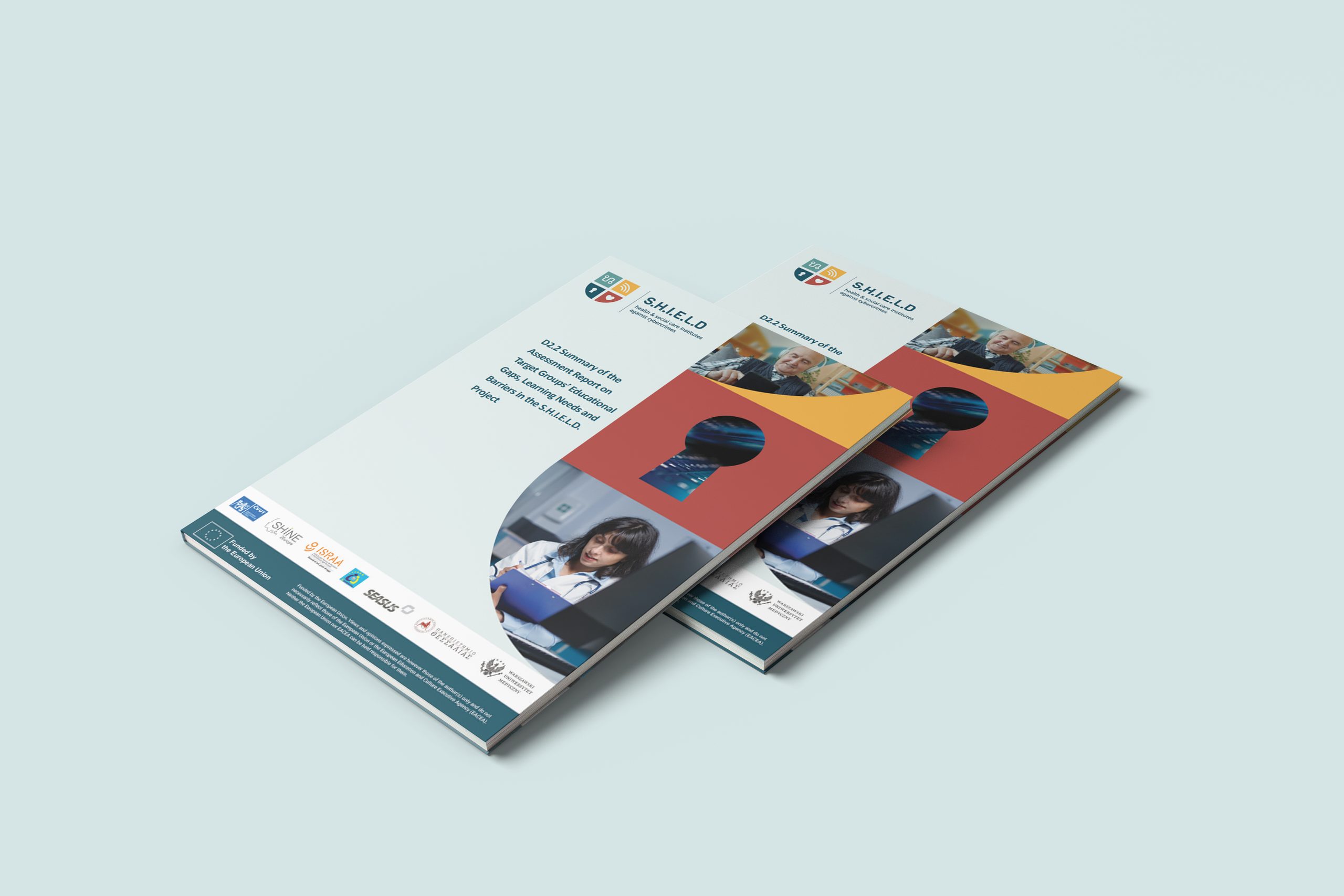
The project has published its second research deliverable, D2.2 – Summary of the Assessment Report on Target Groups' Educational Gaps, Learning Needs and Barriers in the S.H.I.E.L.D., capturing what students, professionals and experts in health and social care across seven European countries told us they need from cybersecurity training.
The S.H.I.E.L.D. project (Securing health and social care institutions' resilience to cybercrime through empowerment, literacy, and digital skills of the workforce and students) has published a summary of the Assessment Report on Target Groups' Educational Gaps, Learning Needs and Barriers.
An assessment questionnaire, covering 22 questions, gathered 58 anonymised responses. In parallel, Living Labs (interactive sessions built around nine open-ended questions) were held in person or remotely with 36 participants, combining theory and practice to surface real-world challenges the training must address.
Key findings. Educational gaps: around 70% of participants had already received some cybersecurity training yet self-rated their understanding at only 3–4 out of 5. Existing training leans heavily on theoretical knowledge, leaving a clear gap in practical, real-world response skills.
Learning needs: no single topic dominated; participants want training that spans the full range of cybersecurity risks, from everyday scams to serious cyberattacks. The most requested skills were raising awareness of best practices, securing data, responding to a cyberattack, and identifying misinformation and phishing. On format, the preference was clear: interactive, visual, scenario-based learning with games, quizzes or simulations.
Learning barriers: the most universal obstacle is a severe lack of value placed on the time required, with HSC professionals and students prioritising immediate care duties over training perceived as an administrative add-on. Other barriers include a disconnect between generic past training and real clinical practice, "security fatigue" and intimidation around technical jargon (particularly among younger learners), and gaps in organisational IT support and a culture that allows staff to report mistakes without fear.
To read the full report summary, visit shielderasmus.eu.