The project has published its first research deliverable, D2.1 – Systematic Literature Review, exploring the current approaches, challenges, and emerging practices for strengthening cyber resilience within Health and Social Care (HSC) institutions.
The S.H.I.E.L.D. project (Securing health and social care institutions' resilience to cybercrime through empowerment, literacy, and digital skills of the workforce and students) has published its first systematic literature review, mapping the current evidence base on cyber resilience in the health and social care (HSC) sector.
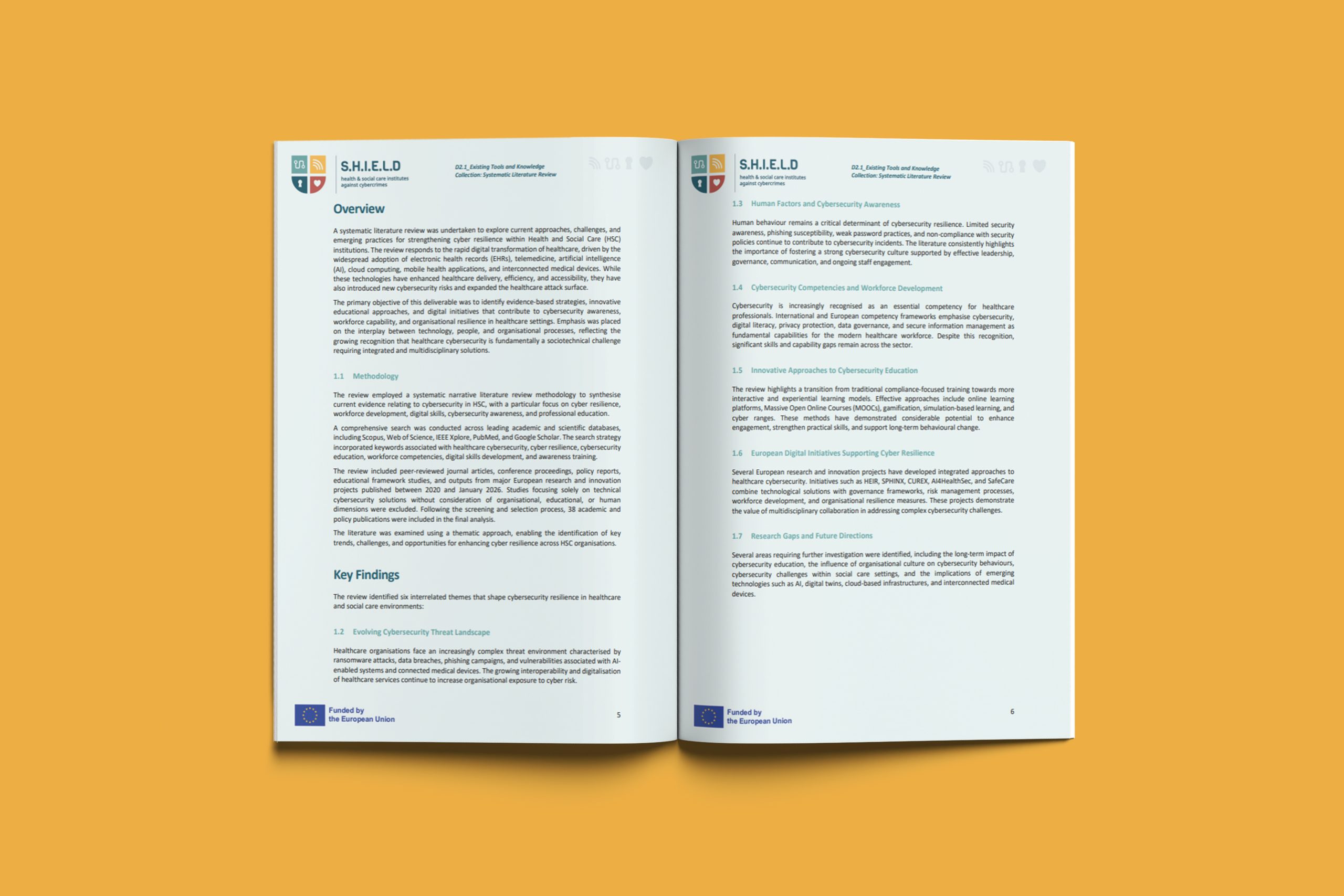
The review responds to the rapid digital transformation of healthcare. The growing use of electronic health records, telemedicine, artificial intelligence, cloud computing, mobile health applications and interconnected medical devices has improved care delivery, but it has also expanded the sector's exposure to cyber risk.
To build an evidence-based foundation for the project's future training and tools, the review team searched leading academic and scientific databases (Scopus, Web of Science, IEEE Xplore, PubMed and Google Scholar) for peer-reviewed articles, conference proceedings, policy reports and outputs from major European research projects published between 2020 and January 2026. Following screening, 38 publications were included in the final thematic analysis.
The review identified 6 themes shaping cyber resilience across health and social care: Evolving Cybersecurity Threat Landscape; Human Factors and Cybersecurity Awareness; Cybersecurity Competencies and Workforce Development; Innovative Approaches to Cybersecurity Education; European Digital Initiatives Supporting Cyber Resilience; and Research Gaps and Future Directions.
To read the full literature review, visit shielderasmus.eu.