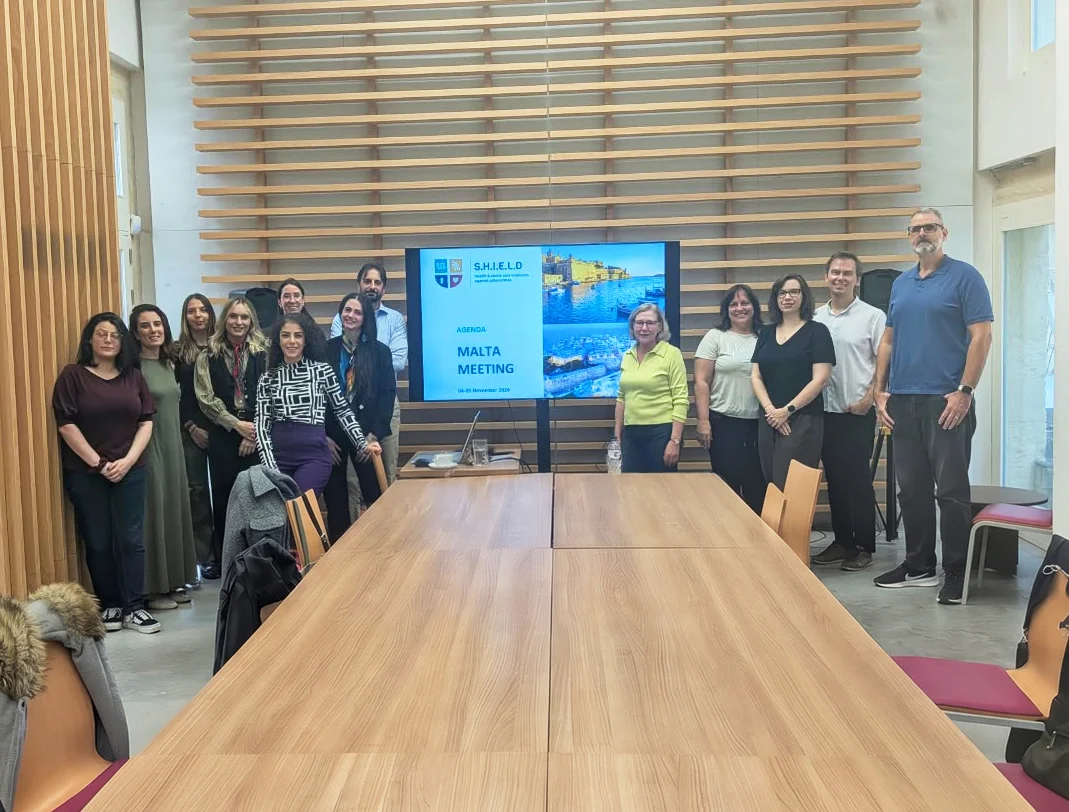
MALTA – The S.H.I.E.L.D. project consortium met in Malta on 4–5 November for a two-day plenary meeting hosted by Seasus. Partners from across Europe used the meeting to move the initial development of the project's outputs forward, with a focus on the curriculum structure and an early preview of the gamified learning app.
Curriculum and Module Design: much of the meeting was dedicated to refining the curriculum that will be hosted within the project's Moodle platform. Partners reviewed how the thematic modules fit together and agreed on how each one will be built. Every module will combine online learning content, practical activities and case studies drawn from real-world situations. Learners will be asked reflective questions so they can apply what they have learned to their own work, rather than only absorbing theory.
A Flexible, Two-Track Approach: a key outcome from Malta was agreement on a two-track model for completing the course. All learners will receive the same content, with the choice of how to complete it. A blended track combines online study with in-person teaching and leads to full academic accreditation. An online track is available for learners who need maximum flexibility and leads to its own recognised certification. Both professionals and students can participate in the way that suits their schedules and goals.
A Clear Roadmap: the consortium agreed a timeline for developing the curriculum covering the drafting and review of modules, translation into all partner languages and the addition of content to the Moodle platform. With these milestones in place, all partners are working toward the same goals in the months ahead.
A First Look at the App: one highlight of the meeting was a preview of the S.H.I.E.L.D. gamification experience, presented by Seasus. Partners saw how the mobile app will turn case studies into interactive scenarios where users can practise responding to cyber threats in a safe, simulated environment. The app will connect with the Moodle platform so that learning online and on mobile feels like a single experience. Partners also discussed ways to make scenarios more relevant to the specific settings learners work in.
Measuring Impact: on the second day, partners worked on the evaluation framework for the upcoming pilot. They agreed on an approach using pre- and post-training assessments alongside learner feedback, which will allow the consortium to measure how participants' knowledge and confidence grow and use those findings to improve the course before its wider release.
Looking Ahead: over the coming months, partners will focus on writing and reviewing module content, developing further case studies and preparing the platform and app for testing. For more information and the latest resources from the project, visit shielderasmus.eu.
Related posts